
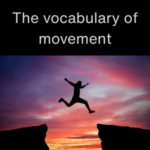

Have you ever noticed that English has dozens of different ways to say “walk” or “run”? Someone can stroll through a park, march in a protest, wander around a city, limp home after an injury, or leap over a puddle.
In this podcast, we’re exploring the language of movement. You’ll learn verbs, collocations, idioms, and expressions that will make your English much more natural and expressive when you speak about movement.
Voice message from Marta from Poland
English rarely needs extra adjectives because the verb itself often contains the meaning.
Instead of walking slowly and pleasantly – stroll (stroll through the park, take an evening stroll)
Instead of walking proudly – march (soldiers march into war, demonstrators march in the street)
Instead of walking painfully – limp (He walks with a limp, I limped home after twisting my ankle)
Movement vocabulary
Wander – to walk without a destination (We wandered around London all afternoon. I wandered through the old city). Your mind can also wander if it’s not focused on something.
Roam – to move over a large area (lions roam freely in the nature reserve)
Saunter – to walk slowly and confidently (He sauntered into the room)
Stagger – to walk unsteadily (The drunken man staggered out of the bar)
Tiptoe – walk quietly (I tiptoed upstairs so as not to wake up my parents)

Plod – to walk slowly and heavily (The exhausted old man plodded home and went to bed)
Shuffle – walk without lifting your feet much (My grandmother shuffled into the kitchen to make tea)
Stride (stride-strode-stridden) – walk with confidence (He opened the door, strode across the room and sat down without saying anything)
Dash – to move quickly and/or with urgency (The escaped prisoner made a dash for the border fence)
Hop – to jump on one foot (or in the case of a rabbit, with two feet together). (hop into the car and I’ll give you a lift)
Skip – light, happy movement. Often making small jumps (The children skipped down the street happily). Can also mean to miss or avoid (I decided to skip lunch today because I’m really busy)
Leap – a powerful jump (He leapt over the fence).
Tread (tread-trod-trodden) – to step carefully/carelessly (“Ouch! Be careful where you tread!/You’ve just trodden on my toes!”
Bounce – move up and down repeatedly. (Stop bouncing on the bed!)
Trip – to fall while walking (The boy’s laces were untied, so he tripped and fell down.)
Idioms and expressions
Go with the flow – accept things as they happen without trying to control them. “You don’t need to plan every minute of the holiday. Just go with the flow.”
Hit the ground running – start something with a lot of energy and without delay. “On her first day at work, Emma hit the ground running and finished three projects.“
Walk on air – feel extremely happy. “Laura was walking on air after she passed her C2 Proficiency exam “
Walk a mile in someone’s shoes – try to understand another person’s feelings or situation. “Before you criticise her, walk a mile in her shoes.”
Walk the talk – do what you say you will do “Good leaders walk the talk by setting a good example.”
Learn to walk before you run – learn the basics before trying something difficult. “Take a beginner’s course first—you need to learn to walk before you run.”
Jump to conclusions – form an opinion too quickly without enough information. “Don’t jump to conclusions before you hear the whole story.”
Jump through hoops – do many difficult or unnecessary things to achieve something. “We had to jump through hoops to get our visas approved.”
Leap of faith – a decision made without being completely sure of the result. “Starting my own teaching business was a leap of faith, but it was worth it.”
Take a step back – pause and look at a situation more carefully. “Let’s take a step back and think about the best approach to exam preparation.”
Step by step – slowly, one stage at a time. “If you practise step by step, your English will improve. Don’t walk before you can run.”
Look before you leap – be prepared and take precautions before doing something risky. “Don’t invest all your money in that new company right now. Check out their performance first – look before you leap!”
…and now it’s your turn to practise your English. Can you think of a way to include at least 3 or 4 of the vocabulary and expressions from today’s podcast in an audio message of 90 seconds?
Send us a voice message. https://www.speakpipe.com/inglespodcast
Send us an email with a comment or question to craig@inglespodcast.com or belfastreza@gmail.com
If you’re a Spanish speaker and you want to improve your English with free and paid resources, visit the mansioningles website at mansioningles.com and for paid products you can browse the online store at https://store.mansioningles.net/

If you would like a full transcription of this podcast you might consider joining our Patreon program. As a Patreon member, you’ll receive the full transcription by email every week so that you can read every word that we say and you’ll get a monthly invitation to join Craig for an informal chat on Zoom to practise your speaking. https://www.patreon.com/inglespodcast

Welcome to our new Patreon supporters who have joined us this month:
Juan Gonzalez
In next week’s episode: Two Roads: Understanding The Road Not Taken by Robert Frost
If you enjoyed this podcast, please tell your friends.
The music in this podcast is by Pitx. The track is called ‘See You Later’