


Have you ever wondered whether you should use “whether” or “if” in English? They can seem very similar, and in many sentences, both are possible. But there are some important differences between them and knowing when to use each one can make your English sound much more natural and accurate.
In today’s episode, we’re going to look at “whether” and “if”, explore the situations where you can use either one, and learn when “whether” is the better or even the only choice.
So, whether you’re an intermediate level learner, or an advanced one, if you listen to the end of the episode, you’ll feel much more confident choosing between these two little words.
Voice message from Rocio from Cadiz
Rocio is progressing by leaps and bounds (a great deal)
The vocabulary of movement | Walk, Stroll, Wander, Leap & More
https://inglespodcast.com/633
What’s the difference between ‘try AND do something’ and ‘try TO do something’?
‘Try AND do’ is more informal.
“I’ll try and call him tomorrow”
“I’ll try and restart the computer.”
Verbs followed by gerunds or infinitives with a change in meaning: https://inglespodcast.com/554
The pronunciation of ‘the’
A question on our website from Diego from Colombia:
“Hi , my name is Diego from Colombia and I’ve got a question. I don’t know when I should use the word whether and when the word if. Could you please help me?
“Whether” vs “If”
In some cases, whether and if are interchangeable and it doesn’t matter which one you use, especially verbs related to knowing, asking, finding out, remembering, deciding, and wondering.
I don’t know if/whether Roy is coming.
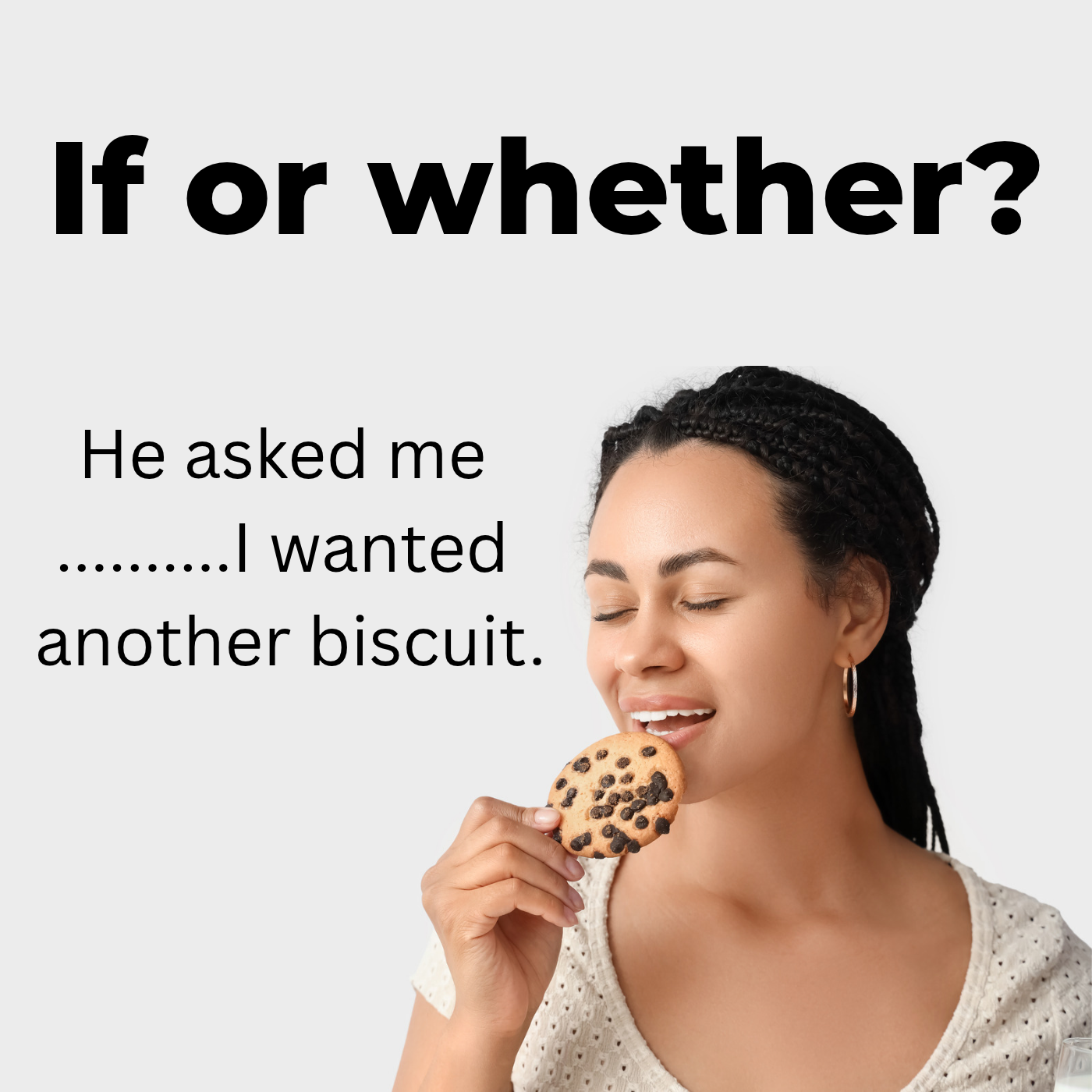
Reza asked me if/whether I wanted another biscuit.
I wonder if/whether AI will kill us all and destroy the world.

Use whether, not if, before infinitives.
They can’t decide whether to get married now or wait.
Nectarina hasn’t decided whether to accept the job offer.
I don’t know whether to go.
After Prepositions , we use only whether.
I haven’t settled the question of whether I’ll go back home.
There was a big argument about whether we should move to a new flat.
It depends on whether we have enough money.
Use whether after some expressions.
Whether or not
Whether or not you agree, we have to make a decision.
I don’t know whether or not I’ll be here for Christmas.
Regardless of whether
We’re going to have the meeting tomorrow, regardless of whether everyone can attend.
Regardless of whether you agree with the decision, you have to follow the new rules.
The question of whether
We need to consider the question of whether we can afford it.
The question of whether students should be allowed to use AI in exams is becoming increasingly important.
Don’t forget that “If” has another meaning: condition
If can mean “on the condition that” or “assuming that.” In this case, whether cannot replace it.
If it rains, we’ll stay at home. (We will stay at home on the condition that it rains)
You cannot say: ❌ Whether it rains, we’ll stay at home. ❌
But whether can mean “if something happens or if it doesn’t happen.”
Whether it rains or not, we’ll stay at home.
This means that the rain makes no difference to the decision.
If it rains, we’ll stay at home. (condition for staying home)
Whether it rains or not, we’ll stay at home. (Rain or no rain, the result is the same)
If you study, you’ll pass. (condition)
I don’t know if you’ll pass. (uncertainty)
Expressions with “if” (not “whether”)
If only – to express a wish/regret (If only I’d listened to my mother’s advice!)
Only if – emphatic condition (We’ll tell you only if you promise to keep it a secret.)
Even if – emphatic (I wouldn’t lend him money even if he begged me. No way!)
As if – like it were true, but it isn’t (He walks around as if he owns the place, but he’s just an employee.)
Whether is often more formal, especially in written English.
I don’t know whether she’s coming.
I don’t know if she’s coming. (more common in spoken English)
Check out our episode based entirely on the classic poem “If” by Rudyard Kipling:
https://inglespodcast.com/537
…and now it’s your turn to practise your English.
Send us a voice message. https://www.speakpipe.com/inglespodcast
Send us an email with a comment or question to craig@inglespodcast.com or belfastreza@gmail.com
If you’re a Spanish speaker and you want to improve your English with free and paid resources, visit the mansioningles website at mansioningles.com and for paid products you can browse the online store at https://store.mansioningles.net/

If you would like a full transcription of this podcast you might consider joining our Patreon program. As a Patreon member, you’ll receive the full transcription by email every week so that you can read every word that we say and you’ll get a monthly invitation to join Craig for an informal chat on Zoom to practise your speaking. https://www.patreon.com/inglespodcast

If you enjoyed this podcast, please tell your friends.
The music in this podcast is by Pitx. The track is called ‘See You Later’