

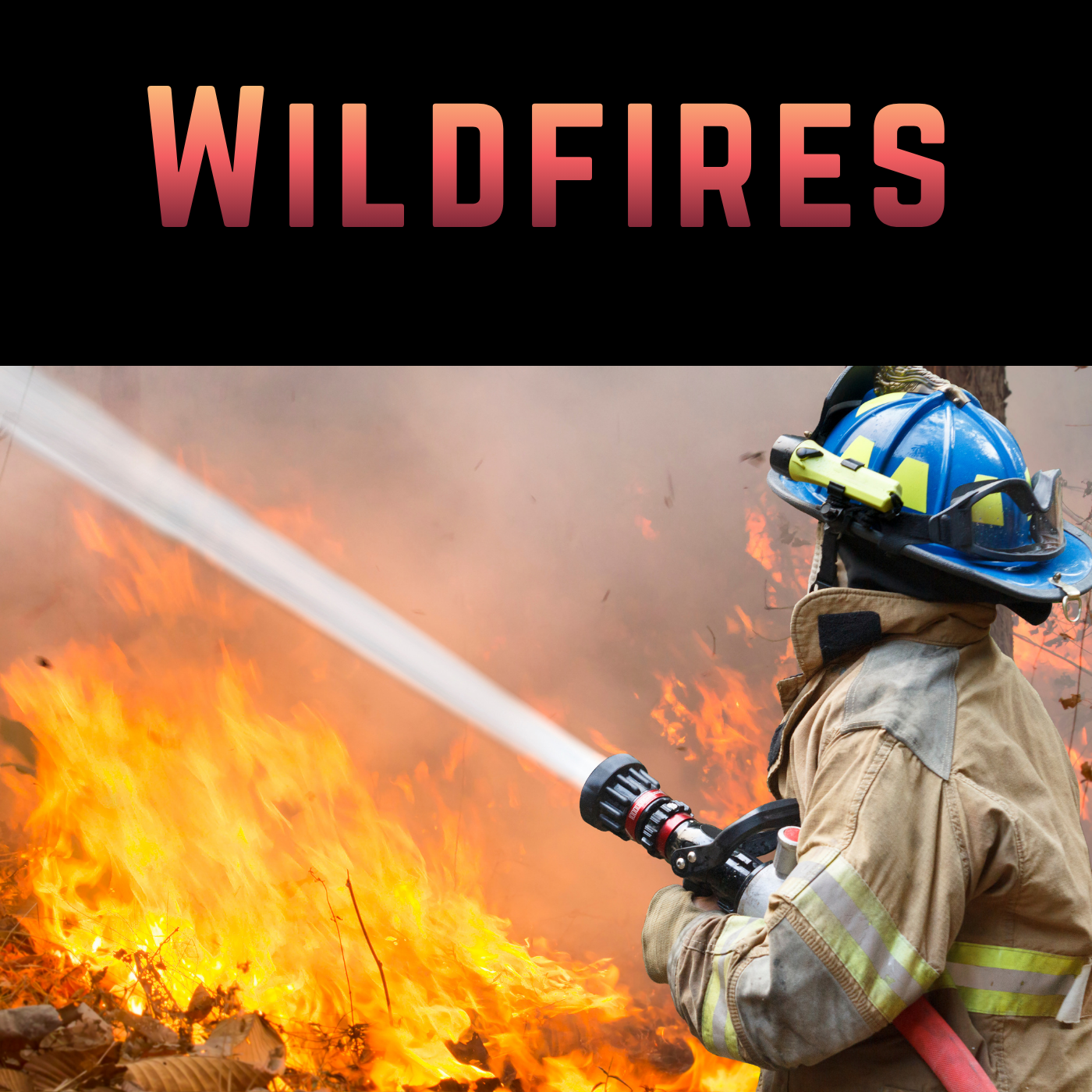
Forest fires are becoming more common in many parts of the world. At the time of recording, there are terrible wildfires blazing in France, Spain, Canada, Italy and many other countries.
Every summer, we see dramatic images of burning forests, smoke-filled skies and firefighters working tirelessly to protect people and wildlife. But what causes these fires? Are they always natural? How do they affect our environment, our health and our future?
In today’s episode, we’ll explore the language of forest fires while discussing one of the biggest environmental challenges facing the world today.
What causes wildfires?
Natural causes: lightning, extremely dry weather, extremely hot weather, rockfalls and volcanic eruptions
Human causes: campfires left unattended, cigarettes, bonfires, fireworks, industrial activity, agricultural activity, vehicles, machinery, barbecues, arson, and powerlines
Around 90% of wildfires are estimated to be caused by human activity, either directly or indirectly.
By far the most common natural cause of forest fires is lightning.
The falling rocks from rockfalls can strike each other, causing sparks which can ignite dry vegetation.
Climate change is increasing the frequency and intensity of wildfire conditions in many regions by creating hotter, drier environments.
About 20 – 35% of all forest fires in Spain annually are thought to be started intentionally!

Vocabulary
To trigger a wildfire
To ignite – ignition
To/a Spark
To/a blaze – a blazing fire
Parched landscape
Fire-prone area
High fire risk (area)
To spread rapidly
Fierce flames
Strong winds – gusts of winds
To fan the flames
To spread uncontrollably
To engulf – the fire has engulfed the whole area
Smoke inhalation
A plume of smoke – moving area of smoke
A column of smoke – a long vertical body of smoke
Burning embers
To smoulder – a smouldering fire
Thick/dense smoke
A raging/devastating/uncontrolled fire
Flammable = Inflammable (synonyms, not opposites!)
Flammable material = Inflammable material
Non-flammable (the opposite of flammable/inflammable)
To contain (a fire)
To burn out – to eventually stop burning
To extinguish
Waterbombing
Firebreak – gap of land cleared of vegetation
Firewall – a substantial constructed barrier to prevent spread of fire (or digital activity)
Pyromaniac – someone obsessed with starting fires
Smoke from major wildfires can travel hundreds or even thousands of kilometres, affecting air quality far from the fire itself. Canadian wildfires have affected northern US states. Wildfires in France this year actually created their own weather system!
Pyrocumulonimbus (pyroCb) clouds are towering thunderstorm clouds that form above intense wildfires. The extreme heat from the fire causes hot, smoke-filled air to rise rapidly. As the air climbs, it cools and the water vapour within it condenses into a cloud. If the updraft is strong enough, the cloud can continue growing into a full thunderstorm.
These clouds can produce lightning, strong winds, hail, and even fire-generated tornadoes. Lightning from a pyrocumulonimbus cloud can ignite new wildfires, making large fires even more difficult to control. Nasa calls them the “fire-breathing dragon of clouds”.
Idioms
Play with fire – take a very dangerous risk
An old flame – an ex-partner, romantically speaking
Fight fire with fire – use your opponent’s attack strategy as your defence strategy
Burn yourself out – become exhausted from working too hard.
Where’s there smoke, there’s fire – if there are rumours of something, it’s probably true
Burn the candle at both ends – work too much and get too little rest.
Under fire – criticised. “The government came under fire for its response.”
Out of the frying pan, and into the fire – moving from a bad situation to an even worse one
To burn your bridges – destroy your chances of returning to a previous situation or relationship.
A burning desire – an extremely strong wish to do something
Burn a hole in your pocket – be eager to spend money
Get on like a house on fire – have a really good relationship
Discussion
If you had to leave your home due to a wildfire, and you could only save 3 things, which 3 things would you save?
How would you punish repeat offenders who intentionally provoke forest fires?
…and now it’s your turn to practise your English. Do you think climate change is to blame for the increase in fires during the last few years? Have you, or anyone you know, been affected by wildfires?
Send us a voice message. https://www.speakpipe.com/inglespodcast
Send us an email with a comment or question to craig@inglespodcast.com or belfastreza@gmail.com
If you’re a Spanish speaker and you want to improve your English with free and paid resources, visit the mansioningles website at mansioningles.com and for paid products you can browse the online store at https://store.mansioningles.net/

If you would like a full transcription of this podcast you might consider joining our Patreon program. As a Patreon member, you’ll receive the full transcription by email every week so that you can read every word that we say and you’ll get a monthly invitation to join Craig for an informal chat on Zoom to practise your speaking. https://www.patreon.com/inglespodcast

Welcome to our new Patreon supporters who have joined us this month:
Aleksandra Jurczak
If you enjoyed this podcast, please tell your friends.
The music in this podcast is by Pitx. The track is called ‘See You Later’