

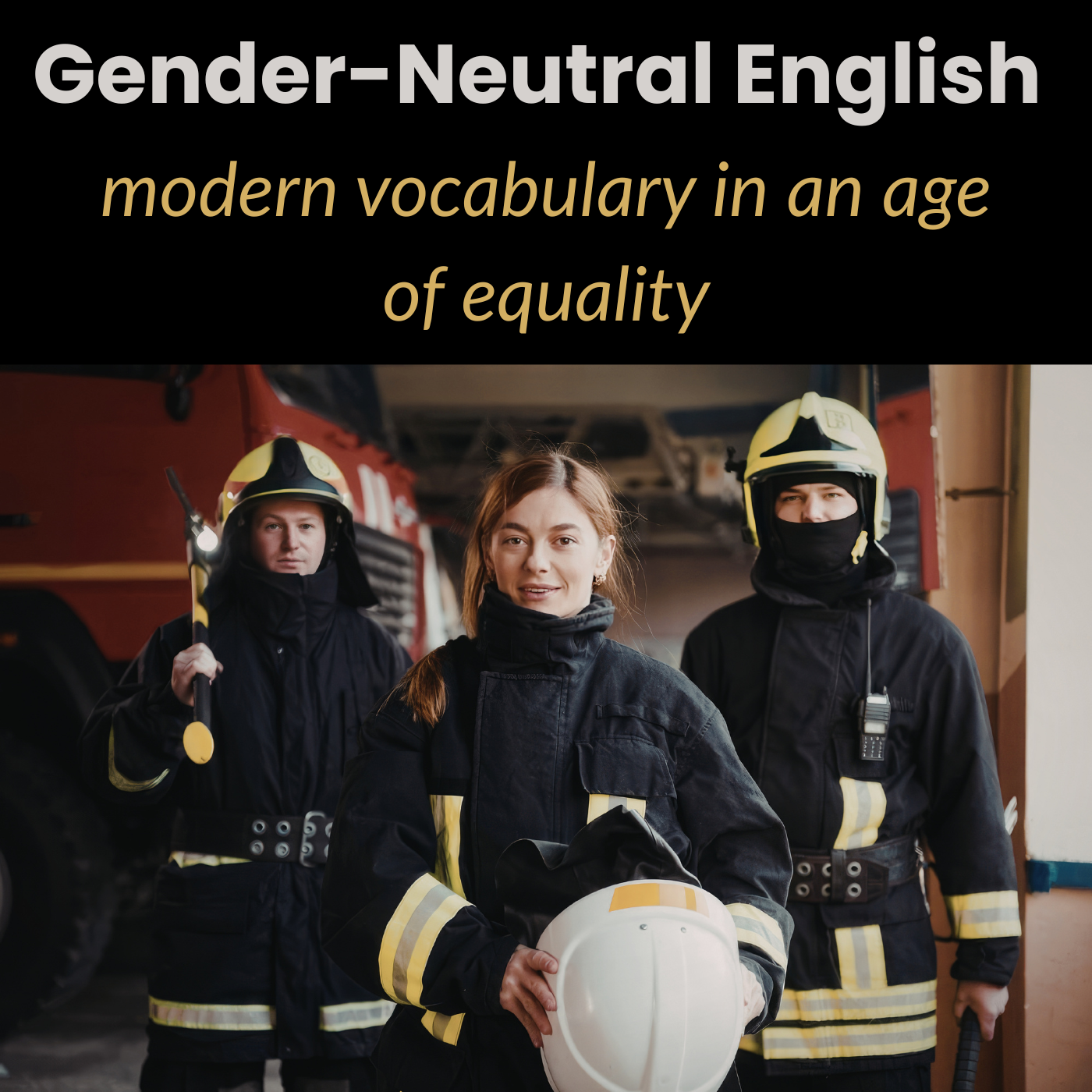
Language is constantly evolving, and one of the most noticeable changes in modern English is the move towards gender-neutral vocabulary.
In today’s episode, we’ll explore how English has developed from gender-specific words like fireman and policeman to more inclusive terms like firefighter and police officer. We’ll look at why these changes matter, how they’re used in day-to-day English, and how you can use them naturally and confidently.
Voice message from Enrique from Seville
How to write an email to a technical support team: https://inglespodcast.com/177
How to improve your reading skills: https://inglespodcast.com/280
The Extensive Reading Foundation
Use AI: Paste text into AI with this, or a similar, prompt:
“I am a B2 level learner of English and I would like to improve my reading skills. Please adapt the following text to B2 level.”
Write a list of 10 difficult words, collocations and expressions in this text together with the translations in Spanish (or a definition in simple, basic English)
Luis Gallardo is working on an ANKI vocabulary card generator for his e-reader. If you are technologically-minded and want to follow Luis’s progress, you can do so on his blog

Message on the inglespodcast website from Manuel who writes:
I’m listening to this episode about new words while I’m commuting to work (https://inglespodcast.com/600 )
In my country, Spain ,in recent years there has been a debate about “neutral gender” words, like niño, niña o niñe, to be inclusive with all kind (kinds) of genders. Some people use the symbol @ for example in a letter or email to address it to a man/woman/other, for example Bienvenid@s.
I heard that nowadays in English words like fireman or policeman are in desused (not politically correct) and instead firefighter and police officer are the words used to be a neutral gender. This could be an interesting issue to discuss in an episode.
What Is Gender-Neutral Language?
Gender-neutral language = language that avoids showing gender unless it is relevant
Also called: inclusive language and non-sexist language
What’s the purpose?
To be inclusive
To avoid assumptions about gender
To reflect modern society and professional roles
Some Common Examples
Jobs and professions
fireman – firefighter
policeman/policewoman – police officer
chairman – chair / chairperson
businessman – businessperson
stewardess/steward – flight attendant
postman – postal worker/mail carrier
salesman – sales assistant / sales representative
cameraman – camera operator
General terms
mankind – humankind/humanity
man-made – artificial/synthetic
manpower – workforce / staff
the common man – the average person
odd man/one out – the one that’s different to the others
the man in the street” – average person
man up – be brave (potentially outdated/problematic)
man’s best friend – dog
to bitch – to complain/criticise someone but not openly
no man’s land – the (disputed) territory between two countries
Pronouns
Everyone must bring his book. – Everyone must bring their book.
(Singular “they” is now standard in modern English)
Some Key Vocabulary & Expressions
promote equality
avoid bias
reflect society
politically correct – PC
challenge stereotypes
inclusive workplace
gender-neutral terms
respectful language
Why Has English Changed?
Social awareness has increased
More women and diverse groups in all professions
Language influences perception (If we say fireman, we imagine a man. If we say firefighter, we imagine anyone.)
…and now it’s your turn to practise your English. Does changing language really change society? Can inclusive language ever go too far?
Send us a voice message. https://www.speakpipe.com/inglespodcast
Send us an email with a comment or question to craig@inglespodcast.com or belfastreza@gmail.com
If you’re a Spanish speaker and you want to improve your English with free and paid resources, visit the mansioningles website at mansioningles.com and for paid products you can browse the online store at https://store.mansioningles.net/

If you would like a full transcription of this podcast you might consider joining our Patreon program. As a Patreon member, you’ll receive the full transcription by email every week so that you can read every word that we say and you’ll get a monthly invitation to join Craig for an informal chat on Zoom to practise your speaking. https://www.patreon.com/inglespodcast

Welcome to our new Patreon supporters who have joined us this month:
Pablo Albert
Sue Chen
In next week’s episode: Describing Physical Appearance in English
If you enjoyed this podcast, please tell your friends.
The music in this podcast is by Pitx. The track is called ‘See You Later’