

In this podcast, you’ll learn how to make your English more colourful and descriptive. We are looking at similes—a type of figurative language that compares two different things using the words “like” or “as.”
What is a simile?
A simile compares two different things using:
Like or as … as
Examples:
He’s as tall as a tree
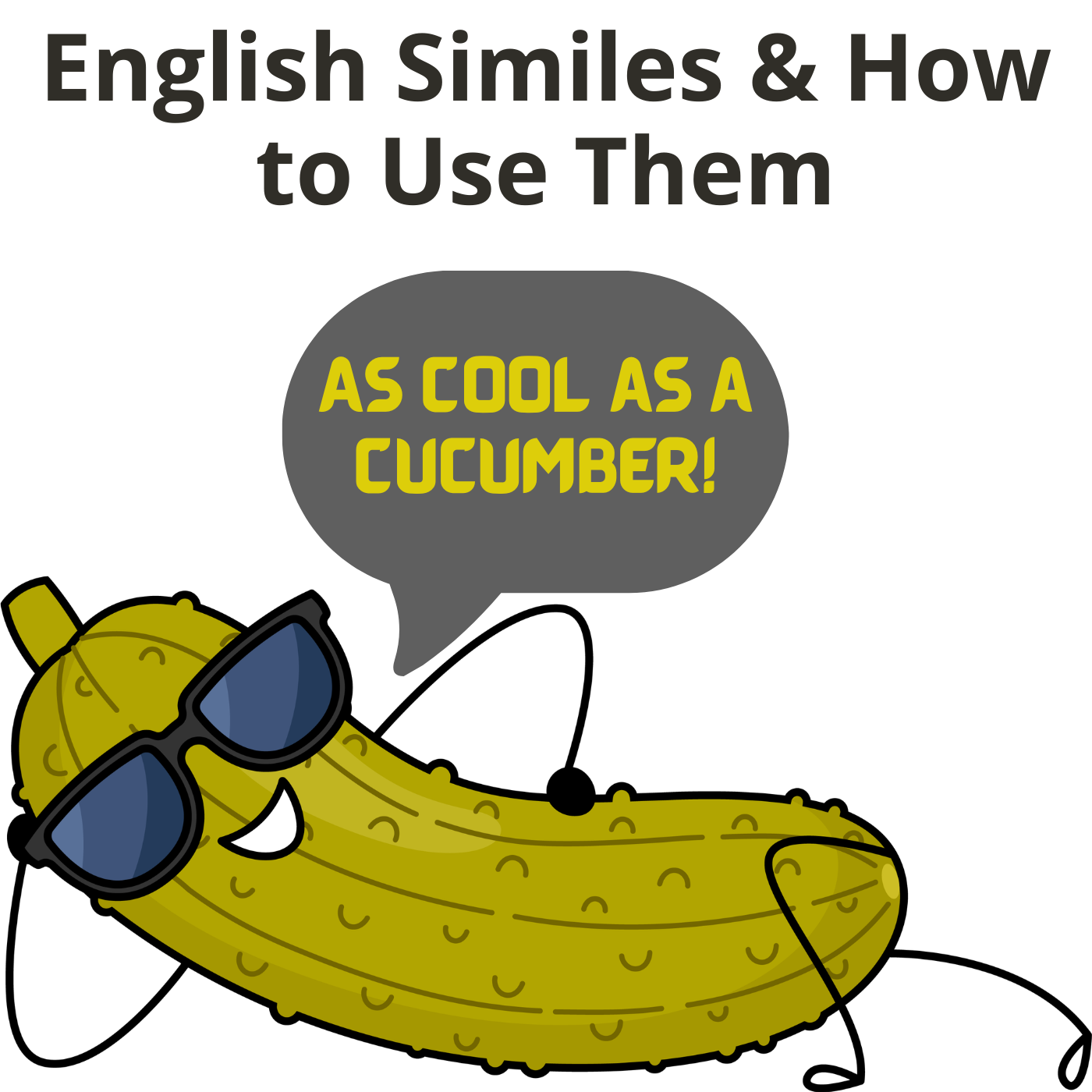
She’s as cool as a cucumber
She ran like the wind
I slept like a baby
A simile paints a mental picture instead of giving a boring description.
Why do we use them?
Visual Impact: They create a “mental picture” for the listener.
Emphasis: Saying someone is “very quiet” is okay, but saying they are “as quiet as a mouse” is much more expressive. Instead of saying: He’s very nervous, we can say: He’s as nervous as a cat on a hot tin roof.
Cultural Connection: Many similes are “idiomatic,” meaning they reflect how English speakers see the world
The grammar of similes
1) as + adjective + as + noun
as cold as ice / as busy as a bee / as strong as an ox
We never change the adjective form. In modern English some people sometimes drop the first “as”, e.g. He’s (as) cold as ice. Many refer to animals.
NOT: Xas busier as a beeX
2) verb + like + noun/gerund
She eats like a bird
I slept like a log
How boring! It’s like watching paint dry!
He eats like a pig
“Fly like a butterfly, sting like a bee” /Muhammmad Ali, boxer)

Some more common similes with AS
as blind as a bat – can’t see well
as daft as a brush – very stupid
as dry as a bone – completely dry/bone dry
as quiet as a mouse – making very little noise.
as light as a feather – weighing almost nothing
as white as a sheet – pale from fear/shock
as brave as a lion – showing a lot of courage.
as stubborn as a mule – refusing to change your mind
as proud as a peacock – very proud
as bright as a button – very smart/intelligent
as clean as a whistle – spotlessly clean
as clear as mud – not at all clear; very confusing
as high as a kite – very noticeably affected after taking drugs
as fit as a fiddle – In very good physical health. as quiet as a mouse – very quiet
as useful as an ashtray on a motorbike – useless
as quick as lightning – very fast
as sick as a dog – feeling very ill
as drunk as a skunk – very drunk
as cheap as chips – very economical
as sober as a judge – not drunk at all; very serious
as easy as ABC – straightforward; easy to understand
as flat as a pancake – completely flat
as deaf as a post – profoundly/very deaf
as good as gold – very well behaved
as hard as nails – used to describe a tough guy/woman
as mad as a hatter – used to describe a really crazy person
Some more common similes with LIKE
sleep like a log – sleep deeply
like taking candy from a baby – very easy
eat like a pig – eat messily
work like a dog – work very hard
like water off a duck’s back – when something has no effect at all on someone
watch someone like a hawk – To watch someone very closely and suspiciously.
like a bull in a china shop – tactless and/or clumsy
fit like a glove – To be the perfect size or shape (often for clothes).
stick out like a sore thumb – to be very conspicuous
spread like wildfire (Information or news) to circulate very rapidly.
smoke like a chimney- To smoke cigarettes constantly.
like two peas in a pod – when two people are very similar in many ways
like a fish out of water – in a completely new and alien situation
Some of these similes are obvious (to smoke like a chimney). Others, not so much.
Where do these similes originate from?
As drunk as a skunk (it rhymes)
As fit as a fiddle (By the 1600s, English speakers used it metaphorically for a person whose body works perfectly — like a well-tuned instrument.)
As blind as a bat (medieval misunderstanding of animal behaviour. People believed bats were blind because: they fly at night, they crash into things, they live in dark caves
We now know they use echolocation and actually see fairly well.)
As mad as a hatter (Hatters/Hatmakers – people who made/mended hats – often used mercury for their work in the past. Exposure to mercury can cause slurred speech, tremors, stumbling and, in extreme cases, hallucinations, which can resemble mental problems)
As cool as a cucumber (Inside a cucumber the temperature is often cooler than the air outside due to high water content).
…and now it’s your turn to practise your English. Do you have similar animals in your language for these traits? (e.g., Is a stubborn person a ‘mule’ in your country?)
Send us a voice message. https://www.speakpipe.com/inglespodcast
Send us an email with a comment or question to [email protected] or [email protected]
If you’re a Spanish speaker and you want to improve your English with free and paid resources, visit the mansioningles website at mansioningles.com and for paid products you can browse the online store at https://store.mansioningles.net/

If you would like a full transcription of this podcast you might consider joining our Patreon program. As a Patreon member, you’ll also get an invitation once a month to join Craig for an informal chat on Zoom to practise your speaking and you’ll have the warm, fuzzy feeling of supporting the podcast. https://www.patreon.com/inglespodcast

Welcome to our new Patreon supporters who have joined us this month:
Małgorzata Wawer
If you enjoyed this podcast, please tell your friends.
The music in this podcast is by Pitx. The track is called ‘See You Later’