

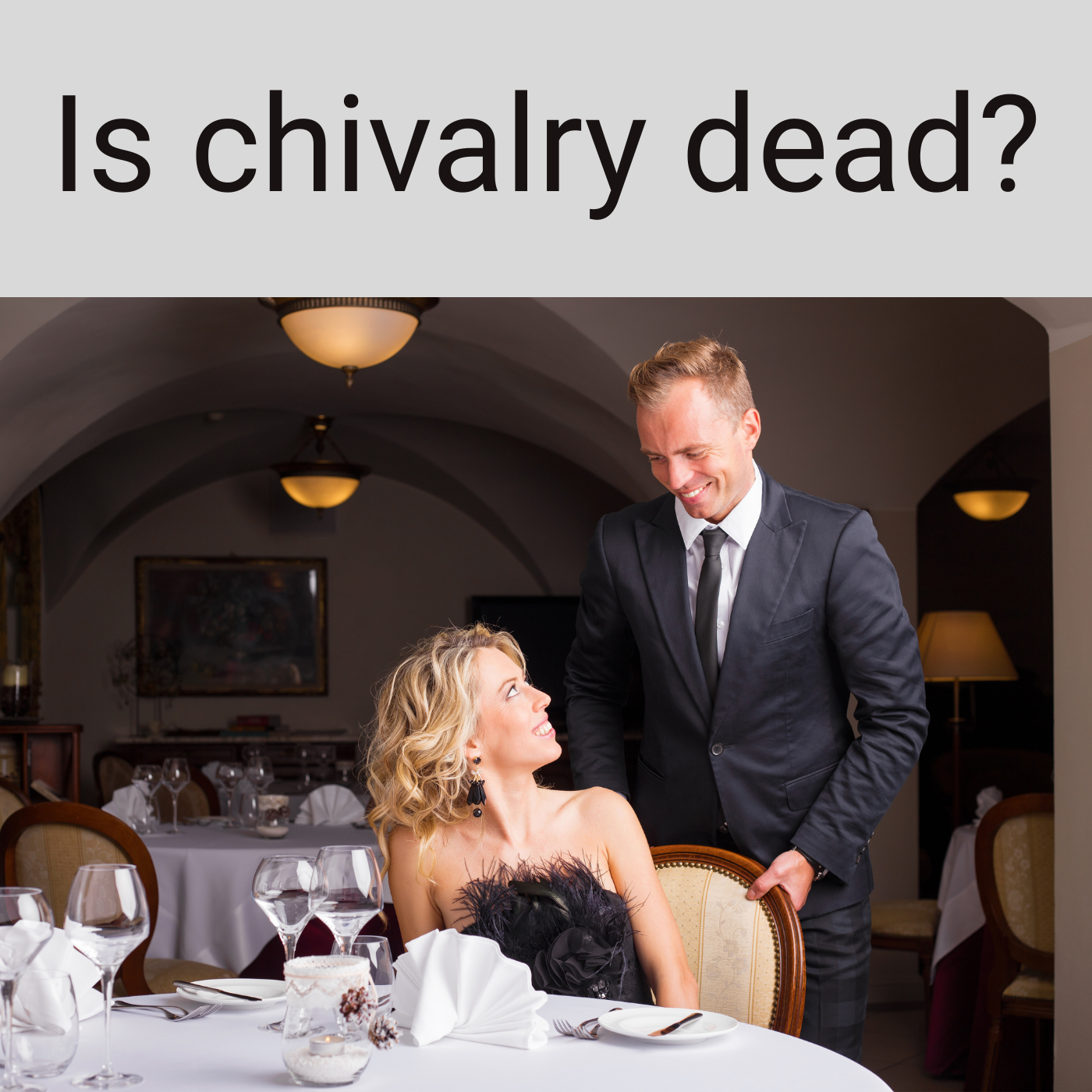
This week, we ask the question, ‘Is chivalry dead?’. When was the last time someone held open a door for you to walk through, or helped you to put your coat on? In this episode, we’ll briefly explain the origins of chivalry and look at some modern-day examples to see if chivalry, good manners and correct behaviour still exists.
What is chivalry?
Showing politeness, kindness, respect and consideration towards others, especially in everyday social situations.
It also includes respectful communication—listening without interrupting, speaking politely, and treating people with dignity regardless of gender.
At its core, chivalry is about empathy and social responsibility. It reflects an awareness of others and a willingness to act in a courteous and supportive way, helping to create a more respectful and civil society.
Where does the concept of Chivalry come from?
The word chivalry comes from the Old French word, which relates to cheval (horse in French). Only well-educated, refined, rich men had their own horse. In the Middle Ages, chivalry was the code of conduct followed by knights. It set out how knights were expected to behave, both in battle and in everyday life.
This code of chivalry included values such as:
loyalty to one’s lord
courage and honour in combat
protection of the weak
respect towards women
honesty and courtesy
Over time, as knights disappeared and society changed, the military meaning faded, but the moral and social values remained. Today, chivalry no longer refers to fighting or warfare; instead, it describes polite, respectful, and considerate behaviour in modern life.
So while modern chivalry looks very different, its roots are firmly connected to medieval knights and their ideals.

Does chivalry still exist?
Let’s look at some examples of actions that might be considered chivalrous and try to decide if chivalry is alive and well in today’s society.
Opening the door for someone and letting them go first
Helping a lady (or anyone) with their coat or jacket
Protecting women and children first in an emergency/accident
Escorting a lady home to her door, especially at night, but not entering her house!
Offering your seat on public transport
Respecting zebra crossings and stopping for pedestrians
Carrying heavy bags for someone who needs help
Walking on the road side of the pavement to shield a companion from traffic
Letting cars merge in front of you from a side road or slip road
Standing up when someone enters the room
Pulling out a chair before someone sits down
Letting others speak without interrupting
Using polite language such as “please”, “thank you”, and “after you”
Helping someone up if they trip or fall
The captain never abandoning a sinking ship until everyone else has left first
So, does chivalry still exist?
Can traditional acts of chivalry (such as opening doors or paying for meals) be seen as respectful, patronising, or both? Why?
Are certain acts of chivalry just an excuse or cover for sexism?
…and now it’s your turn to practise your English. You’ve heard our opinion, but what do you think? Does chivalry still exist where you live? Have you noticed any cultural differences in chivalry from one culture to another?
Send us a voice message. https://www.speakpipe.com/inglespodcast
Send us an email with a comment or question to [email protected] or [email protected]
If you’re a Spanish speaker and you want to improve your English with free and paid resources, visit the mansioningles website at mansioningles.com and for paid products you can browse the online store at https://store.mansioningles.net/

Thank you to our Patreon supporters. Join our Patreon program and you get instant access to the transcriptions of this podcast and live Zoom chats so that you can practice speaking. https://www.patreon.com/inglespodcast

Welcome to our new Patreon supporters who have joined us this month:
Emilio Tamburini
uziv uziv
Samuel Perez
Kendy Aparecido Osiro
María Elisa Alvarez Torres
In next week’s episode: Australia
If you enjoyed this podcast, please tell your friends.
The music in this podcast is by Pitx. The track is called ‘See You Later’