

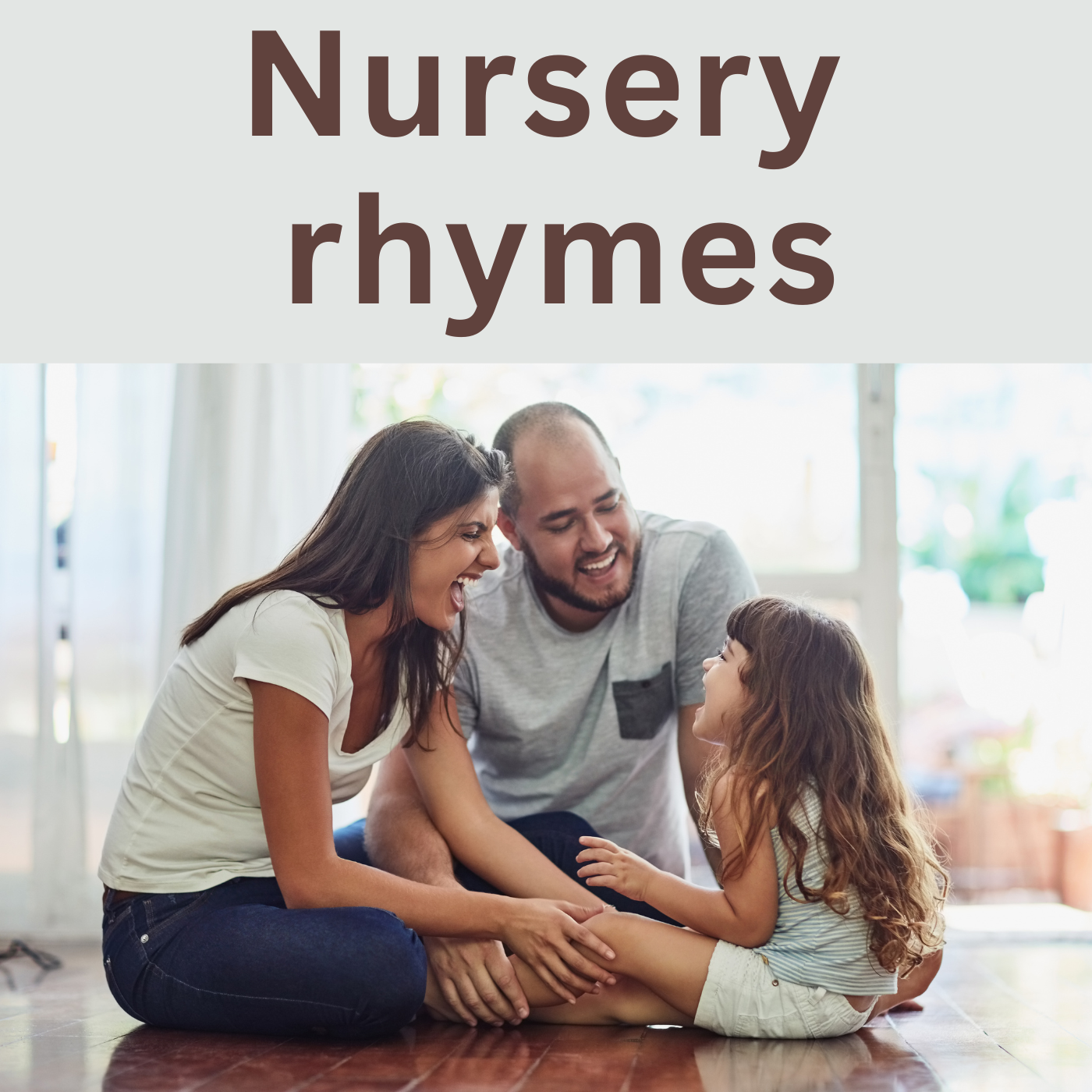
In this podcast, we explore a fun and effective way to improve your English: using nursery rhymes. You might think these simple songs are just for children, but they are actually perfect tools for advanced learners.
Nursery rhymes are full of rhythm, rhyme, and repetition — all of which help you internalise English pronunciation, stress patterns, weak forms, linking and intonation.
You’ll learn classic rhymes like “Humpty Dumpty” and “Sing a Song of Sixpence,” and we’ll show you how to use them to refine your pronunciation, practise rhythm, and expand your vocabulary.
Nursery rhymes
Humpty dumpty (First appeared in print in 1797)
Humpty Dumpty sat on a wall,
Humpty Dumpty had a great fall.
All the king’s horses and all the king’s men
Couldn’t put Humpty together again.
Lessons to be learned:
Don’t sit on a wall if you’re an egg!
Don’t send horses to do surgery!
Mary Had a Little Lamb (Written and published in 1830 in Boston, USA. Inspired by a real event: a girl named Mary Sawyer brought her lamb to school.)
Mary had a little lamb,
Its fleece was white as snow;
And everywhere that Mary went,
The lamb was sure to go.
It followed her to school one day,
Which was against the rule;
It made the children laugh and play,
To see a lamb at school.
fleece -the wool coat of a sheep
sure (in this context) – certain; guaranteed
Three Blind Mice (Popular verse which first appeared in England around 1609. Its dark origins actually refer to the execution of three Protestant bishops by Catholic Queen Mary I.)
Three blind mice, three blind mice,
See how they run, see how they run,
They all ran after the farmer’s wife,
Who cut off their tails with a carving knife,
Did you ever see such a thing in your life,
As three blind mice?
carving knife – a large sharp knife used for cutting up big pieces of cooked meat
Twinkle, Twinkle, Little Star (Poem “The Star” written by Jane Taylor in 1806. It became one of the most popular English-language nursery songs worldwide.)
Twinkle, twinkle, little star,
How I wonder what you are!
Up above the world so high,
Like a diamond in the sky.
Twinkle, twinkle, little star,
How I wonder what you are!
Twinkle – to shine with a small, quick light that changes slightly
Wonder – to feel curious and want to know something
Sing a Song of Sixpence (Originated in 16th–17th century England, first printed in 1744)
Sing a song of sixpence,
A pocket full of rye;
Four and twenty blackbirds
Baked in a pie.
When the pie was opened,
The birds began to sing;
Wasn’t that a dainty dish
To set before the king?
The king was in his counting house
Counting out his money;
The queen was in the parlour
Eating bread and honey.
The maid was in the garden
Hanging out the clothes;
Along came a blackbird
And pecked off her nose.
sixpence – an old British coin worth six pennies
rye – a type of grain used to make bread
four and twenty old-fashioned way of saying “twenty-four”
dainty – small, delicate, and tasty
dish – a prepared food, a meal
counting house – office where money is counted/stored
parlour – a sitting room (old-fashioned)
maid – a female servant
pecked – struck or bit with a bird’s beak
…and now it’s your turn to practise your English.
Send us a voice message. https://www.speakpipe.com/inglespodcast
Send us an email with a comment or question to [email protected] or [email protected]
If you’re a Spanish speaker and you want to improve your English with free and paid resources, visit the mansioningles website at mansioningles.com and for paid products you can browse the online store at https://store.mansioningles.net/
Thank you to our Patreon supporters. Join our Patreon program and you get instant access to the transcriptions of this podcast and live Zoom chats so that you can practice speaking. https://www.patreon.com/inglespodcast

Welcome to our new Patreon supporters who have joined us this month:
Á. Reina, Romeu da Costa, Yolanda and Vanessa Martínez
If you enjoyed this podcast, please tell your friends.
The music in this podcast is by Pitx. The track is called ‘See You Later’
Such a great podcast
Thanks, Sergio. We really appreciate your support. Happy New Year and all the best for your English journey in 2026!